

Brown and Greene
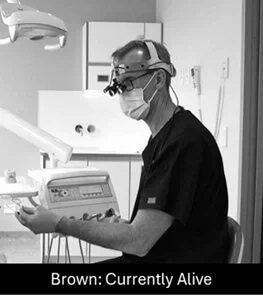
I have a very good friend called Brown. He’s a doctor – he’s my doctor - not the “bend over and check the prostate” sort. He’s more the open wide, I’ll fix your teeth, then go for a world trip on the proceeds type of doctor: he’s a dental surgeon. We often eat and drink together while talking about books and writing. Brown is exceptionally well read and endlessly inspiring to be around, particularly when it comes to helping a frustrated writer smash through writer’s block.
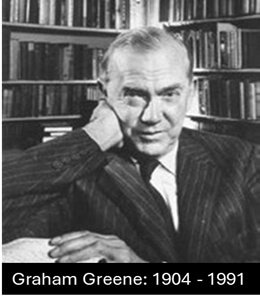
It was Brown who introduced me to Greene, Graham Greene, a writer I had barely heard of at the time, but one who quickly fascinated me. He handed me The Quiet American as a starting point, which led naturally to Our Man in Havana and The Human Factor. Before long, I found myself asking: what is it about this writer that has hooked me so completely?
Greene’s style feels honest, patient, and resolutely adult. He trusts the reader to notice meaning without being told what to think. There is a quiet tension running through his work, coupled with moral ambiguity, that makes his characters feel deeply human rather than heroic or sentimental. By blending inner conflict with external stakes, Greene creates writing that has depth while remaining clear, readable, and psychologically compelling.
I’m not wired to write like Greene, but I can certainly learn from him. One quote of his that I particularly like is:
“The great advantage of being a writer is that you can spy on people. You're there, listening to every word, but part of you is observing. Everything is useful to a writer, you see - every scrap, even the longest and most boring of luncheon parties.”
Brown has suggested this to me often—carry a small notebook and jot down things you see and hear, because it’s all useful for something. And he’s right. I need to get better at “spying” on people (in a healthy way!) because it’s the details about people—their characteristics, behaviours, and talents—that readers truly love. I’ve noticed that when people talk about what they enjoy in The Minerva Agenda, they often start by mentioning
the pace, the excitement, and the twists. But when pressed for specifics, they almost always end up talking about the characters.
Greene captures something else essential when he says:
“The moment comes when a character does or says something you hadn't thought about. At that moment he's alive and you leave it to him.”
This rings true for me. I write organically; the story emerges rather than being plotted step by step in a spreadsheet. As a result, things happen as I write that were never planned. Events unfold for characters in The Minerva Agenda that were never remotely considered at the outset—and interestingly, it’s often these unplanned moments that stick with readers and carry the most impact.
So Brown and Greene sit on my shoulders when I write, quietly guiding me—one through friendship and conversation, the other through pages and sentences.
I’ll leave you with a final quote from Greene, one that feels particularly apt for our times, perhaps reminding us of the enduring need for adventure, chaos, and boldness:
“In Italy, for 30 years under the Borgias, they had warfare, terror, murder and bloodshed, but they produced Michelangelo, Leonardo da Vinci and the Renaissance. In Switzerland they had brotherly love, they had 500 years of democracy and peace - and what did that produce? The cuckoo clock”.